

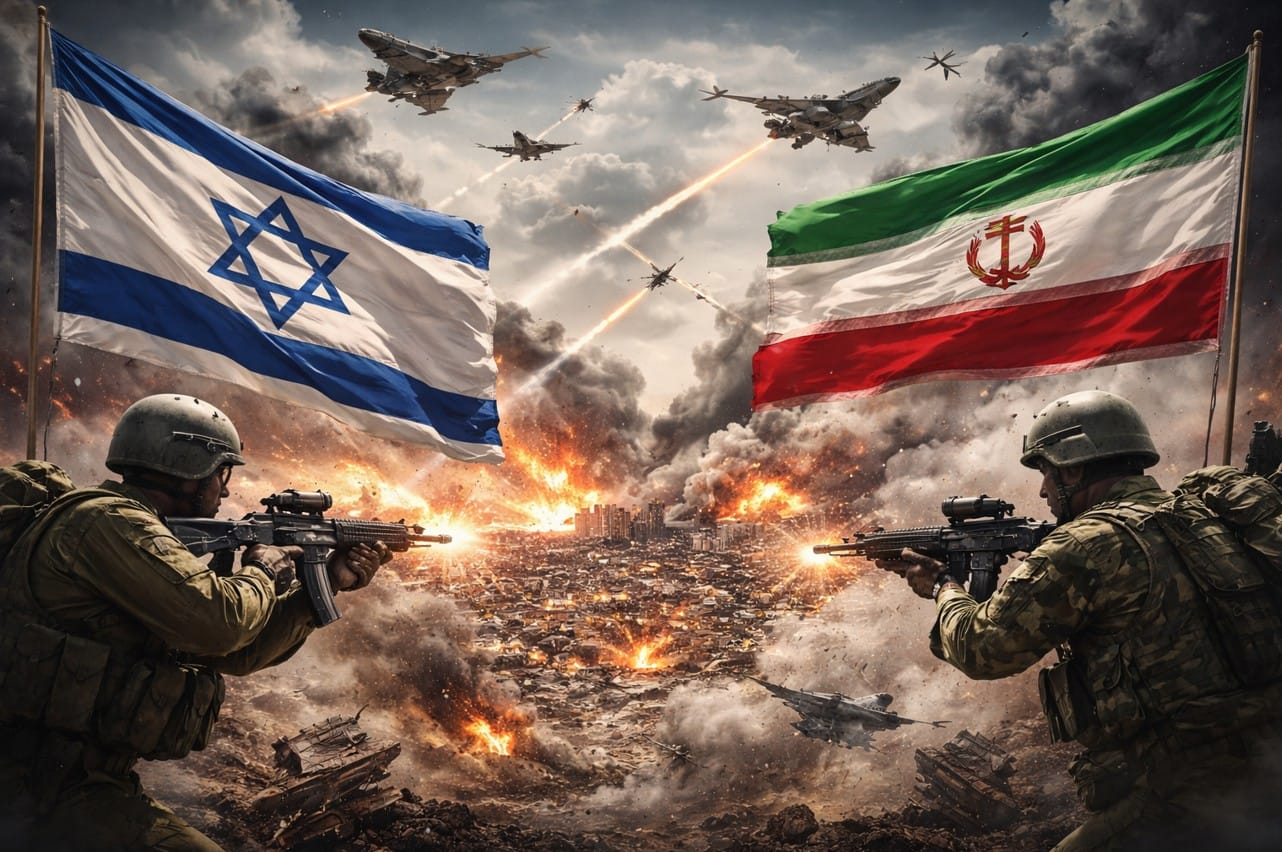
As fighting between Israel and Iran escalates, the loudest claims are now colliding with the hardest constraints: military bandwidth, public tolerance, and the global economy’s dependency on a single chokepoint—the Strait of Hormuz.
Israel’s message is blunt: the campaign is not close to finished. Iranian leaders, meanwhile, are rejecting the idea that they are begging for an off-ramp. And the United States and the UK are publicly signalling that the immediate priority is not only deterrence—but reopening shipping lanes to stop the energy shock spreading.
What we know (and what we don’t)
Israel says there are still “thousands” of targets in Iran. Israeli military spokesperson Effie Defrin has said Israel is identifying new targets daily and will continue striking Iran and Hezbollah until its objectives are met.
Iran’s Foreign Minister Abbas Araghchi says Iran has not asked the US for a ceasefire and claims there is “no reason” to talk with Americans because Tehran says it was negotiating when the US “decided to attack.”
The UK confirms Keir Starmer and Donald Trump discussed the importance of reopening the Strait of Hormuz to end disruption to global shipping—an unusually direct acknowledgement that economics is now driving diplomacy.
But beyond these statements, some crucial elements remain unclear or contested in public reporting: the true scale of damage to military infrastructure, the reliability of casualty and strike assessments during active conflict, and whether the “reopen Hormuz” goal is militarily straightforward or politically explosive.
The strategic “truth” behind Israel’s claim: targets aren’t the same as outcomes
When Israel says it still has “thousands” of targets, that can mean two things at once:
- Target depth: layered sites—missile units, production chains, command networks, air defences, logistics nodes.
- Target discovery: intelligence updates create new targets faster than aircraft can strike them.
In other words, a long target list is not automatically a sign of success—it can also reflect the reality that destroying capabilities is harder than hitting coordinates. Even Israel’s own messaging has leaned toward disabling Iran’s military apparatus rather than claiming a quick, clean end-state.
Critics’ pushback
Critics of Israel’s approach will argue:
- Escalation math: expanding strikes deeper into Iran increases the risk of region-wide spillover.
- Diminishing returns: after early high-impact strikes, later waves can become costlier, less decisive, and harder to justify politically.
- International legitimacy: prolonged campaigns often lose diplomatic oxygen, even among quiet sympathisers.
Supporters counter that deterrence only works if Iran believes Israel will keep going—and that the alternative is Iran regenerating capabilities under the cover of diplomacy.
Iran’s “we never asked for a ceasefire” line: defiance, bargaining, or both?
Araghchi’s insistence that Iran hasn’t asked for a ceasefire serves multiple purposes:
- Domestic politics: it projects control to a population under pressure and to hardline security institutions.
- Negotiating leverage: if Iran appears to be “seeking a deal,” it looks weak; if it appears unbroken, it raises the cost of forcing concessions.
- Narrative framing: Iran is positioning itself as the party that was engaged in talks and then attacked—aiming to shift blame for escalation.
Critics’ pushback
Sceptics will say the public posture doesn’t rule out private feelers via intermediaries—and that “no ceasefire request” can still coexist with backchannel attempts to stabilise key pain points like shipping corridors. The Associated Press, for example, reports both heightened international naval discussions and selective ship passage dynamics, showing the situation is not binary.
Hormuz: why the war is now also an energy crisis story
The Strait of Hormuz is the conflict’s pressure valve—and its potential accelerator. The moment shipping is disrupted, the war stops being “regional” in economic terms.
That’s why the Starmer–Trump call matters: it signals that the UK and US are publicly tying their crisis response to restoring maritime flow, not just exchanging warnings.
The uncomfortable truth
Reopening Hormuz isn’t just a naval engineering task. It carries strategic messaging:
- Who controls escalation?
- Who bears the economic consequences?
- Who is willing to risk direct confrontation at sea?
Trump’s public call for allies to deploy naval forces has not produced firm commitments—highlighting how even major economies hesitate to be drawn into a conflict where the endgame is unclear.
The human dimension: casualties, fear, and the “blackout” battlefield
Conflicts are often judged by maps and missile counts, but the social landscape matters too.
Reports of heightened security checkpoints, fear of searches, and restricted connectivity suggest Iran’s internal environment is tightening under wartime strain. Separate reporting has pointed to arrests of alleged informants inside Iran—an indicator that the war is being fought not only from the air, but through internal security and counterintelligence pressure.
On the Israeli side, emergency services have reported ongoing fatalities and injuries since the conflict began—another reminder that missile exchanges translate into civilian trauma, not just “retaliation cycles.” (These figures can change quickly; treat them as a snapshot from live reporting.)
So what happens next?
Three paths look plausible—none clean:
- Expanded strike campaign and tighter maritime security
Israel continues a broad target program; the US/UK and others focus on escorting, sweeping, and deterrence in and around Hormuz. - De-escalation through proxies and intermediaries
Public defiance remains, but practical deconfliction emerges to prevent full economic rupture. - Regional spillover becomes the main story
Lebanon, Iraq, Gulf states, and global energy markets absorb the shock—pushing external powers to intervene more directly.
The most important point: military momentum and political momentum are different things. Even if one side believes it is “ahead,” the economic and humanitarian consequences can force a recalculation—especially when shipping disruptions start showing up in prices, inflation, and domestic politics across Europe and beyond.


